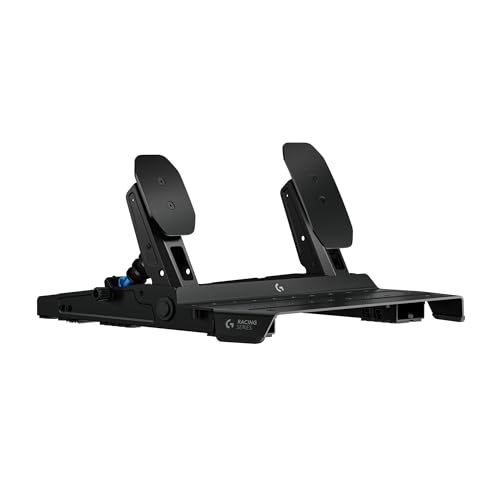
The Pitfall of Broad Search Terms: Why "Load" Isn't Enough for Sim Racing Pedals
In the vast and rapidly evolving world of sim racing, precision isn't just a desirable trait – it's an absolute necessity. From the virtual tracks we race on to the meticulously replicated cockpits we inhabit, every detail matters. Yet, when it comes to upgrading critical components like pedals, many aspiring sim racers make a common mistake: using overly broad search terms. Imagine turning to a general dictionary for the definition of "load" or "to load," expecting to find insights into advanced sim racing technology. As we've seen from various sources, entries detailing the grammatical forms and common uses of words like "load," "loads," or "load on" offer zero specific information relevant to high-performance sim racing equipment. They might discuss carrying weight, responsibility, or the process of putting items onto something, but they completely miss the highly specialized context of load cell pedals sim racing.
This stark disconnect highlights a crucial point: when searching for specialized gear, generic vocabulary is your enemy. A dictionary entry for "load" simply won't explain the sophisticated engineering behind a device designed to measure braking force with pinpoint accuracy. This is why understanding the specific terminology, like "load cell," is paramount. It guides you past irrelevant definitions and directly to the technology that can dramatically elevate your sim racing experience, transforming vague concepts into tangible performance gains.
Unpacking the "Load Cell": The Heart of Performance Sim Racing Pedals
So, if a general understanding of "load" isn't helpful, what exactly *is* a "load cell" in the context of sim racing pedals, and why is it so revolutionary? At its core, a load cell is a transducer that converts force into a measurable electrical output. Unlike traditional potentiometer-based pedals, which measure the *position* or *travel* of the pedal arm, load cell pedals measure the actual *force* applied by the driver's foot. This fundamental difference is a game-changer for sim racers.
Think about driving a real car: you don't brake by pushing the pedal a specific distance; you apply a specific amount of force to achieve the desired braking power. Load cell pedals brilliantly replicate this real-world sensation. When you press the brake pedal, the load cell registers the force, providing a much more accurate and consistent input to the simulation. This translates directly into improved control, allowing for nuanced trail braking, precise brake modulation, and a far greater sense of immersion. For a deeper dive into why general definitions fall short, consider reading our article: Load Cell Pedals: Why General Dictionaries Won't Help.
Why Precision Matters: The Sim Racing Advantage
The benefits of upgrading to load cell pedals sim racing are multi-faceted and profoundly impact your performance and enjoyment:
- Unmatched Consistency: Muscle memory thrives on consistent feedback. With load cell pedals, you learn to apply a specific amount of force for a specific braking outcome, rather than guessing a pedal position. This leads to more consistent braking zones lap after lap.
- Superior Modulability: Finer control over braking means you can feather the throttle and brake simultaneously, master trail braking techniques, and prevent lock-ups more effectively.
- Enhanced Realism: The sensation of braking is far closer to a real car, significantly boosting immersion and making the virtual experience feel more authentic.
- Durability and Longevity: High-quality load cell pedals are often built with robust materials and engineering, designed to withstand the significant forces applied during intense racing sessions.
- Faster Lap Times: Ultimately, better control and consistency lead to quicker, more confident laps and improved race results.
While potentiometer pedals are a decent starting point, the step up to load cell technology is often cited as one of the most impactful upgrades a sim racer can make, second only to a direct-drive wheel.
Navigating the Market: What to Look For in Load Cell Pedals
Once you understand the 'why,' the next step is navigating the 'what.' The market for load cell pedals sim racing has expanded significantly, offering options for various budgets and preferences. Here’s what you should consider when making your choice:
Key Features to Evaluate:
- Adjustable Braking Force: A crucial feature allowing you to set the maximum braking force to your preference, typically ranging from 50kg to 200kg or more. This helps tailor the pedal feel to your driving style and physical strength.
- Pedal Travel and Stiffness: Look for pedals that offer adjustments for pedal travel and the ability to change the stiffness using different elastomers or springs. This customization ensures optimal comfort and responsiveness.
- Build Quality and Materials: High-quality load cell pedals are typically constructed from durable materials like CNC-machined aluminum, steel, or even carbon fiber. Robust construction minimizes flex and ensures longevity.
- Software and Calibration: Good pedals come with intuitive software that allows for precise calibration of dead zones, curves, and sensitivity. This fine-tuning is essential for extracting maximum performance.
- Mounting Options: Ensure the pedals are compatible with your existing rig, whether it's a wheel stand, an aluminium profile rig, or a dedicated cockpit.
- Clutch and Throttle: While the brake pedal is the star, don't overlook the quality of the accompanying throttle and clutch pedals. Many high-end sets offer equally advanced sensors for these, though typically not load cells for throttle/clutch due to their different functional requirements.
Budget Considerations:
Load cell pedals sim racing are available across a spectrum of price points. Entry-level options might offer a simple, robust load cell brake with potentiometer throttle/clutch, while high-end professional-grade sets provide unparalleled adjustability, build quality, and extreme force capabilities. Determine your budget first, then explore options within that range, always prioritizing the brake pedal's quality.
Remember, the goal is to invest in a piece of equipment that will enhance your control and consistency for years to come. For more insights into how specific 'load' definitions might mislead sim racers, check out: Weblio's 'Load' Definitions: Not Sim Racing Specific.
Beyond the Basics: Mastering Your Load Cell Pedals
Acquiring a set of load cell pedals sim racing is only the first step; mastering them requires practice and understanding. Here are some actionable tips:
1. Calibration is Key: Don't just plug and play. Spend time in the manufacturer's software calibrating your pedals. Set the maximum force to a comfortable yet challenging level that requires effort but doesn't cause fatigue too quickly. Experiment with dead zones to eliminate any potential sensor noise at the start or end of the pedal travel.
2. Understand Brake Curves: Some software allows you to adjust the brake curve, changing how the input scales with the applied force. A linear curve provides a 1:1 response, while a non-linear curve might make early braking inputs less sensitive, or vice versa. Experiment to find what feels most natural and controllable for you.
3. Develop Muscle Memory: The biggest advantage of load cells is force-based braking. Initially, you might find yourself still thinking in terms of pedal travel. Consciously shift your focus to the *pressure* you're applying. Practice consistent braking points, trying to hit the same maximum force each time before trailing off. Drills focusing solely on braking will be invaluable.
4. Adjust Your Seating Position: Since you'll be exerting more force, ensure your sim rig and seating position are stable and ergonomic. Any flex in your rig will compromise the consistency of your braking inputs and diminish the benefits of your new pedals.
5. Be Patient: There will be a learning curve. Your lap times might even drop initially as your brain adapts to the new feedback mechanism. Stick with it. The long-term gains in consistency, control, and enjoyment are well worth the initial adaptation period.
Conclusion
In the specialized world of sim racing, generic search terms and dictionary definitions simply won't cut it. While a general search for "load" might yield countless irrelevant results, understanding and specifically searching for "load cell pedals sim racing" unlocks a universe of high-performance equipment designed to transform your virtual driving experience. These pedals offer unparalleled precision, consistency, and realism by measuring braking force rather than pedal position, echoing the dynamics of real-world driving.
By investing in and mastering load cell technology, sim racers can achieve greater control, improve lap times, and immerse themselves more deeply in their favorite titles. Remember to prioritize adjustable braking force, robust build quality, and effective software calibration when selecting your next set of pedals. Skip the broad terms; embrace the specificity, and unleash your full potential on the virtual track.