Unpacking 'Load': Why Weblio's Definitions Don't Hit the Sim Racing Mark
When you're deeply immersed in a niche hobby like sim racing, the terminology can get highly specific. You might search for "load" or "loads" in a general dictionary, perhaps even a comprehensive online resource like Weblio, expecting to find answers related to your passion. However, as many dedicated virtual racers discover, the everyday definitions of "load" often fall far short of explaining critical components like
load cell pedals sim racing. This article will explore the common interpretations of "load" found in general dictionaries and highlight why they bear little resemblance to the specialized, technical meaning within the exhilarating world of sim racing peripherals.
The Everyday 'Load': What General Dictionaries Like Weblio Tell Us
Weblio, a popular online Japanese-English dictionary, like many general lexical resources, provides a broad spectrum of definitions for common English words. When you look up "load," you'll typically encounter meanings that relate to weight, burden, or the act of placing something onto another.
As a
noun, "load" commonly refers to:
- A quantity carried or supported: Think of a "truckload" of goods, a "heavy load" for a crane, or the "load" on a bridge. This is about physical weight or volume.
- A burden or responsibility: Metaphorically, one might carry a "load of worries" or face a "heavy load" of work. It speaks to mental or emotional pressure.
- The amount of work to be done: A business might have a "light load" during slow seasons or a "full load" during peak times.
- Electrical or mechanical power demands: In an engineering context, the "load" on an engine or an electrical circuit refers to the power it needs to deliver or cope with.
As a
verb, "to load" typically means:
- To place a quantity of something onto or into something else: "To load a car with luggage," "to load film into a camera," or "to load a program onto a computer."
- To burden or assign a task: "To load someone with responsibility."
- To cause an electrical or mechanical system to operate: "To load a circuit" with a device.
Phrases like "load on" might further elaborate on the act of placing a burden or responsibility upon someone or something. While these definitions are perfectly accurate for everyday communication, they simply do not capture the essence of what a "load cell" means in the context of high-performance racing simulations. For a deeper dive into why general dictionaries fall short, you might find
Load Cell Pedals: Why General Dictionaries Won't Help particularly insightful.
The Chasm Between General 'Load' and Sim Racing 'Load Cell'
The fundamental disconnect arises because "load cell" is a specific technical term, not an everyday usage of the word "load." In the realm of sim racing, a
load cell is a type of transducer that converts force into a measurable electrical output. This force isn't just a vague "weight"; it's a precisely measured pressure applied by the user.
When we talk about
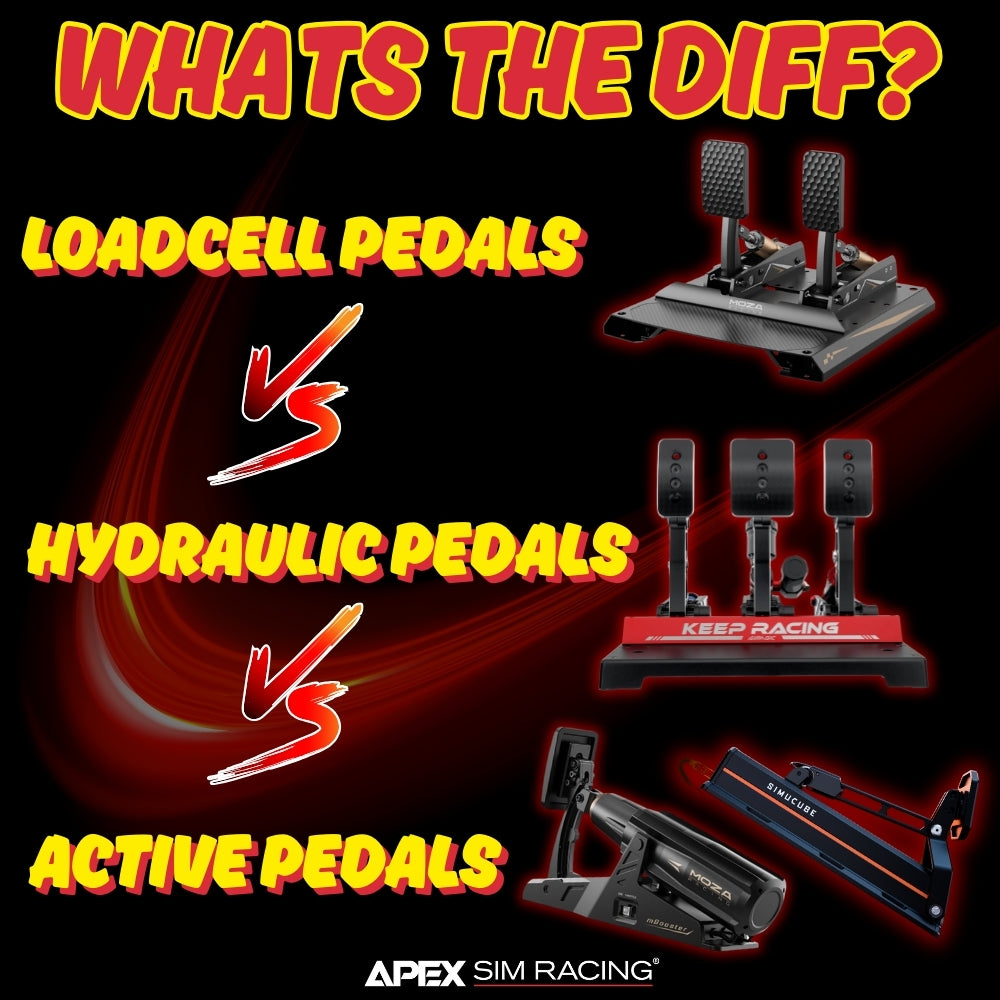
load cell pedals sim racing, we are referring to a highly engineered component that fundamentally changes the feel and performance of a sim racing setup. Unlike cheaper potentiometers (which measure pedal position), load cells measure the actual force exerted on the pedal. This distinction is paramount for realism and performance.
Consider the difference:
*
General "Load": You "load" groceries into your car. The dictionary definition of "load" as a quantity of items applies.
*
Sim Racing "Load Cell": Your foot applies "load" (force) to the brake pedal, which is measured by a "load cell." The dictionary definition of "load" as weight or burden doesn't accurately describe the precise, dynamic force measurement at play here.
The sophisticated technology behind load cell pedals allows sim racers to brake more consistently and effectively, translating muscle memory into precise input rather than relying on an approximate pedal position.
Understanding Load Cell Pedals in Sim Racing: A Game Changer
So, what exactly are
load cell pedals sim racing and why are they considered a pinnacle upgrade for serious virtual drivers? These pedals utilize load cell sensors, which are transducers designed to measure force. When you press the brake pedal, the force you apply is directly measured by the load cell, rather than merely sensing how far the pedal has traveled (as is the case with potentiometer-based pedals).
The benefits of this technology are profound:
- Unmatched Realism: Real-world braking is about pressure, not just pedal travel. Load cell pedals replicate this crucial aspect, allowing for more natural and intuitive braking.
- Improved Consistency: Muscle memory for braking force is far more consistent than muscle memory for pedal position. This leads to more precise braking points and reduced lock-ups.
- Enhanced Control: Fine-tuning braking pressure allows for trail braking techniques, giving racers superior control over their car's dynamics through corners.
- Durability and Precision: Load cells are robust and highly accurate, offering a long-lasting and precise input method that can withstand the rigors of intense sim racing.
Upgrading to load cell pedals is often cited as one of the most impactful improvements a sim racer can make, providing a significant advantage in terms of lap times and overall driving immersion. If you've ever found yourself searching for sim racing pedals using broad terms, you might find clarifying information in
Searching for Sim Racing Pedals: Beware of Broad Terms.
Why Specificity Matters: Navigating Technical Terminology
The experience of looking up "load" in a general dictionary and finding irrelevant results for "load cell pedals sim racing" underscores a crucial point: precision in terminology is vital for technical fields and niche hobbies. Relying on broad definitions for highly specialized components can lead to confusion, frustration, and wasted time.
For sim racers, understanding this distinction is key to:
*
Effective Research: Knowing the correct terms helps you find relevant reviews, tutorials, and product information.
*
Informed Purchasing Decisions: You can differentiate between different pedal technologies and understand why certain products command higher prices.
*
Clear Communication: When discussing setups or troubleshooting with fellow enthusiasts, using precise language ensures everyone is on the same page.
While Weblio and similar dictionaries are invaluable resources for general language comprehension, they are not engineered to delve into the granular details of every specialized field. For topics like advanced sim racing peripherals, forums, dedicated review sites, manufacturer specifications, and community discussions become far more pertinent sources of information.
Actionable Advice for Sim Racers and Tech Enthusiasts
If you're delving into the technical aspects of sim racing or any other specialized hobby, here are some tips:
- Start with Niche Search Engines/Forums: Google's general search is powerful, but consider starting your search within sim racing communities (e.g., Reddit's r/simracing, dedicated forums, YouTube channels focused on sim racing gear).
- Use Specific Keywords: Instead of just "load," search for "load cell pedals," "sim racing brake upgrade," or "force feedback pedals."
- Consult Manufacturer Websites: Product pages for brands like Heusinkveld, Fanatec, or Thrustmaster often provide detailed technical explanations.
- Watch In-Depth Reviews: Content creators specializing in sim racing gear often break down the technicalities in an understandable way.
- Ask the Community: Don't hesitate to post questions in sim racing forums. Experienced members are often happy to share their knowledge.
Conclusion: The Right Tool for the Right 'Load'
Weblio's extensive definitions of "load" serve a valuable purpose in everyday language comprehension, covering everything from physical weight to emotional burdens. However, for the discerning sim racer seeking to understand or upgrade to
load cell pedals sim racing, these general definitions offer little guidance. The world of sim racing demands a specialized vocabulary, where "load cell" refers to a precise force-measuring device that revolutionizes braking performance and realism. By recognizing this distinction and utilizing appropriate, niche-specific resources, virtual racers can navigate the technical landscape more effectively, leading to more informed decisions and, ultimately, a more immersive and competitive sim racing experience.